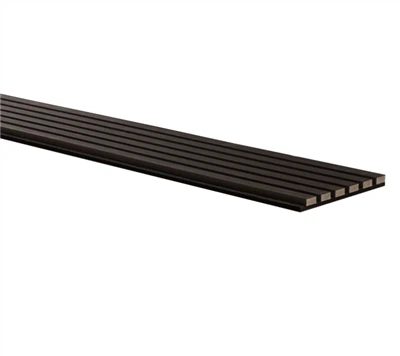
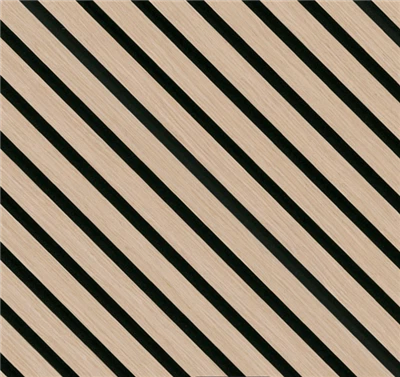
We know that people nowadays pay more attention to decoration, and there are many aspects that are mainly affected by pollution, such as light pollution, water pollution, air pollution, noise pollution, etc. Speaking of noise pollution, many people choose sound-absorbing materials to reduce pollution when decorating. Below, the editor will introduce to you the types of sound-absorbing materials and their main functions.
What are the types of sound-absorbing materials
1. Porous sound-absorbing materials: porous materials such as mineral wool, glass wool, felt, wood wool sound-absorbing panels, etc. These materials also have good absorption of medium and high frequencies, and can absorb low frequencies even when there is an air layer behind them.
2. Perforated board resonant sound absorption structure: Perforated plywood, perforated fiber cement board, perforated paper faced gypsum board, perforated metal board, etc. generally absorb mid to high frequencies, and when combined with porous materials, absorb mid to high frequencies. It is important that the large cavity behind it can also absorb low frequencies.
3. Thin film sound-absorbing structure: Plastic film, canvas, artificial leather and other thin films belong to mid frequency sound-absorbing materials. The thin film sound-absorbing structure formed by the thin film and the cavity behind it can absorb low and medium frequencies.
4. Space sound absorber: Various shapes of space sound absorbers made of sound absorbing materials are hung in the air. Due to their much larger absorption area than the projected area, their absorption coefficient can be calculated as greater than 1 based on the projected area. Hanging the sound-absorbing body in a location with high sound energy flow density (such as near the sound source or where reflection is focused) has good sound absorption effect.
5. Curtain: Textiles with breathable properties are used as curtains, installed at a certain distance from the wall or window opening, similar to the air layer behind porous materials, which can be said to have a certain sound absorption effect on medium and high frequencies.

What is the main function of sound-absorbing materials
1. The reverberation time for controlling the sound quality of auditoriums, such as music halls, theaters, recording studios, studios, auditoriums, conference rooms, multi-purpose halls, sports halls, auditoriums, etc. Generally speaking, suitable sound-absorbing materials are selected during layout to achieve better reverberation time.
2. For some public transportation buildings, such as airport waiting halls, station waiting rooms, and dock waiting rooms. Due to the need to continuously broadcast information such as departure, arrival, or delay times of aircraft and vehicle schedules. Generally speaking, sound-absorbing panel materials are appropriately arranged on ceilings and walls. On the one hand, this can improve the clarity of broadcast information; On the other hand, it can also reduce the noisy noise of passengers, which can make the environment quieter.
3. Eliminate sound quality defects such as echo and sound focusing in the hall. When the sound path difference between direct sound and reflected sound reaches 17m, the time difference between the two sounds reaches 50ms, and the human ear can hear the echo. In some longer halls, the reflected sound from the back wall is prone to echo near the seating area at the entrance. It can be eliminated by arranging strong sound-absorbing panel materials on the back wall. The curved back wall and dome shaped roof of the building also create a sense of focus within the hall. If you want to maintain the original indoor trapezoid, you can use the method of arranging strong sound-absorbing materials on these inner surfaces to eliminate the focus on the hall.
4. Improve the sound insulation of lightweight board walls. Thin and light panel walls such as gypsum board, calcium silicate board, FC board, TK board, and fire-resistant magnesium cement board can be filled with porous sound-absorbing materials such as glass wool, rock wool, and mineral wool in their interlayer to improve the sound insulation effect of such panel walls.
Summary: That's all for the introduction about the types of sound-absorbing materials and their main functions. There are still many types of sound-absorbing materials, and when choosing, you need to consider where you are using them. There are still some differences in the materials used in different areas.