Hey there! As a supplier of Wooden Akupanel Polyester Acoustic Panels, I often get asked about the sound attenuation ability of these panels. So, I thought I'd take a moment to break it down for you.
First off, let's talk about what sound attenuation is. In simple terms, it's the reduction of sound intensity as it travels through a medium. When it comes to acoustic panels, the goal is to absorb sound waves and prevent them from bouncing around a room, which can cause echoes and reverberation.
Wooden Akupanel Polyester Acoustic Panels are designed to do just that. They're made from a combination of wood and polyester fibers, which work together to create a highly effective sound-absorbing material. The wood provides a solid structure, while the polyester fibers act as a cushion, absorbing sound waves and converting them into heat energy.
One of the key factors that affects the sound attenuation ability of these panels is their thickness. Generally speaking, the thicker the panel, the better it will be at absorbing sound. Our panels come in a variety of thicknesses, ranging from 25mm to 100mm, so you can choose the one that's right for your needs.
Another important factor is the density of the panel. A higher density panel will typically have better sound attenuation properties than a lower density panel. Our Wooden Akupanel Polyester Acoustic Panels are available in different densities, so you can select the one that offers the level of sound absorption you require.
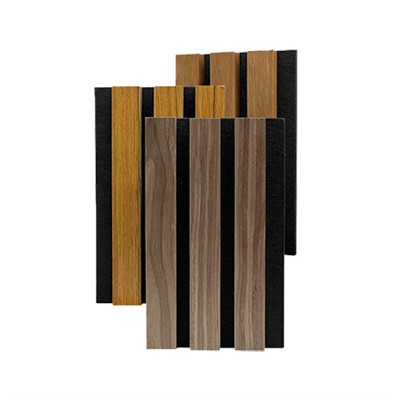
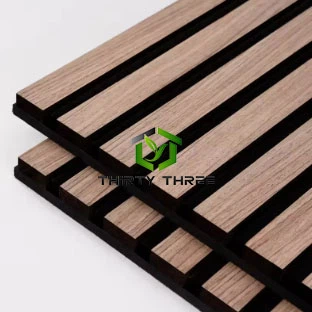
The type of wood used in the panel can also have an impact on its sound attenuation ability. Different woods have different acoustic properties, so choosing the right wood can make a big difference. For example, Walnut Natural Wood Akupanel Acoustic Panel is known for its warm, rich tones and excellent sound absorption qualities.
In addition to thickness, density, and wood type, the installation method can also affect the sound attenuation performance of the panels. Proper installation is crucial to ensure that the panels are able to function effectively. Our team of experts can provide guidance on the best installation methods for your specific application.
Let's take a look at some real - world examples of how these panels can be used to improve sound quality. In a recording studio, for instance, sound attenuation is essential to create a clean, professional sound. By installing our Hot Sale Walnut Natural Wooden Slat Acoustic Wall Panel on the walls and ceilings, you can significantly reduce unwanted noise and echoes, allowing for a more accurate recording.
In a restaurant or café, acoustic panels can help to create a more comfortable dining environment. By reducing the noise level, customers can enjoy their meals without being distracted by loud conversations or background noise. Our High Quality Natural Wood Acoustic Panel Akupanel can be installed in a variety of patterns and colors to match the interior design of the establishment.
In an office setting, sound attenuation can improve productivity and concentration. By minimizing distractions from outside noise and neighboring workstations, employees can focus better on their tasks. Our panels can be customized to fit the specific layout and aesthetic of the office space.
Now, you might be wondering how to measure the sound attenuation ability of our Wooden Akupanel Polyester Acoustic Panels. One common way is to use the Noise Reduction Coefficient (NRC). The NRC is a single - number rating that indicates how well a material absorbs sound. A higher NRC value means better sound absorption. Our panels typically have an NRC value ranging from 0.8 to 1.0, which is considered excellent for sound - absorbing materials.
Another important metric is the Sound Transmission Class (STC). The STC measures how well a material reduces the transmission of sound from one side of a partition to the other. Our panels can also achieve high STC ratings, depending on the thickness and installation method.
It's also worth noting that the sound attenuation ability of our panels can be further enhanced by combining them with other acoustic treatments, such as bass traps or diffusers. These additional treatments can help to address specific acoustic issues in a room, such as low - frequency resonance.


In conclusion, Wooden Akupanel Polyester Acoustic Panels offer excellent sound attenuation ability thanks to their unique combination of wood and polyester fibers, as well as their customizable thickness, density, and wood type. Whether you're looking to improve the sound quality in a recording studio, a commercial space, or a residential area, our panels can provide an effective solution.
If you're interested in learning more about our Wooden Akupanel Polyester Acoustic Panels or would like to discuss your specific acoustic needs, please don't hesitate to get in touch. We're here to help you find the perfect acoustic solution for your project. Let's start a conversation and see how we can make your space sound better!
References:
- Acoustics Handbook, various authors
- Journal of Sound and Vibration research papers on acoustic materials