As a supplier of PVC acoustic wall panels, I've witnessed firsthand the growing demand for effective sound - absorbing solutions in various settings, from offices and recording studios to residential spaces. In this blog, I'll share some insights on how to improve the sound absorption of PVC acoustic wall panels.
Understanding the Basics of Sound Absorption
Before delving into improvement methods, it's essential to understand what sound absorption is. Sound absorption refers to the process by which a material reduces the intensity of sound waves that hit it. When sound waves strike a surface, they can be reflected, absorbed, or transmitted. The goal of using acoustic wall panels is to increase the absorption of sound waves, thus reducing echo and noise levels in a room.
The sound absorption coefficient (SAC) is a key metric used to measure a material's ability to absorb sound. It ranges from 0 (total reflection) to 1 (total absorption). For PVC acoustic wall panels, the SAC can vary depending on factors such as the panel's structure, thickness, and surface texture.
Selecting the Right PVC Material
The choice of PVC material plays a crucial role in determining the sound - absorbing properties of the wall panels. High - quality PVC with appropriate additives can enhance sound absorption. For example, PVC materials with micro - porous structures can trap sound waves more effectively. These micro - pores act as tiny chambers where sound waves bounce around and lose energy through friction.
When selecting PVC, consider its density. A moderately high - density PVC can offer better sound absorption compared to low - density options. However, it's important to strike a balance, as extremely high - density PVC may lead to increased cost and weight.
Optimizing the Panel Design
- Thickness: Increasing the thickness of the PVC acoustic wall panel can generally improve its sound - absorbing capabilities. Thicker panels provide more material for sound waves to penetrate and dissipate energy. However, there are practical limitations, such as space constraints and cost. A thickness of around 10 - 20mm is often a good balance for most applications.
- Surface Texture: A textured surface can enhance sound absorption. For instance, panels with a perforated or grooved surface can break up sound waves and increase the surface area available for absorption. Perforated PVC acoustic wall panels allow sound waves to enter the holes and be trapped inside the panel, where they are absorbed.
- Internal Structure: Incorporating a honeycomb or foam - filled internal structure can significantly improve sound absorption. These structures create multiple pathways for sound waves to travel, increasing the chances of energy dissipation.
Using Additional Sound - Absorbing Layers
Adding additional layers to the PVC acoustic wall panel can enhance its sound - absorbing performance.


- Fibrous Materials: Materials like polyester fiber or mineral wool can be laminated to the back of the PVC panel. These fibrous materials have excellent sound - absorbing properties due to their porous nature. The fibers create a maze - like structure where sound waves get trapped and lose energy.
- Air Gaps: Creating an air gap between the panel and the wall can also improve sound absorption. The air gap acts as a buffer, allowing sound waves to expand and contract, which helps in dissipating energy. A gap of 20 - 50mm can be effective, depending on the specific application.
Installation Considerations
Proper installation is crucial for maximizing the sound - absorbing performance of PVC acoustic wall panels.
- Sealing: Ensure that the panels are properly sealed at the edges. Any gaps or openings can allow sound to leak through, reducing the overall effectiveness of the panels. Use appropriate sealants to fill any joints or cracks.
- Coverage: Cover as much of the wall surface as possible with the acoustic panels. The more surface area that is covered, the more sound waves will be absorbed. In some cases, covering an entire wall may be necessary to achieve the desired level of sound absorption.
Testing and Evaluation
Once the PVC acoustic wall panels are installed, it's important to test and evaluate their sound - absorbing performance. This can be done using a sound level meter to measure the reduction in noise levels before and after installation. If the results are not satisfactory, further adjustments can be made, such as adding more panels or improving the sealing.
Our Product Offerings
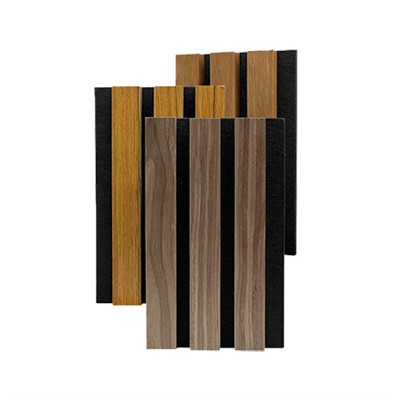
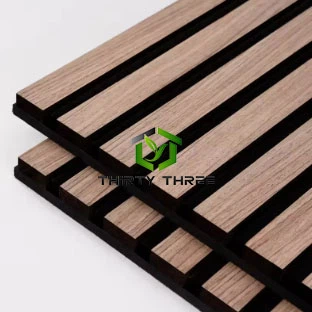
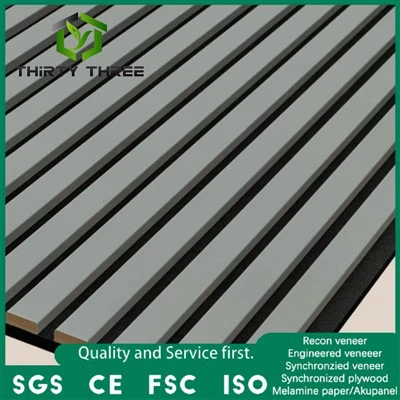
As a supplier, we offer a range of high - quality PVC acoustic wall panels. Our Sound Absorption PVC Surface Akupanel Acoustic Panel is designed with a special surface treatment to enhance sound absorption. It is suitable for interior applications such as offices and residential living rooms.
For those looking for a fireproof option, our Fireproof MDF PVC Polyester Fiber Wooden Acoustic Panel combines the benefits of PVC with fire - resistant materials. It not only provides excellent sound absorption but also ensures safety in case of a fire.
Our Quality Assurance Economical Soundproof Office Slatted Wall Panels are a cost - effective solution for office spaces. They are designed to be easy to install and provide reliable soundproofing performance.
Conclusion
Improving the sound absorption of PVC acoustic wall panels involves a combination of material selection, panel design, additional layers, and proper installation. By following these guidelines, you can achieve significant improvements in noise reduction and create a more comfortable and quiet environment.
If you're interested in purchasing high - quality PVC acoustic wall panels or have any questions about improving sound absorption, we encourage you to contact us for a detailed discussion. Our team of experts is ready to assist you in finding the best solution for your specific needs.
References
- Beranek, Leo L. "Acoustics." American Institute of Physics, 1986.
- Fahy, Frank J. "Sound and Structural Vibration: Radiation, Transmission and Response." Academic Press, 2007.
- Kinsler, Lawrence E., et al. "Fundamentals of Acoustics." Wiley, 2000.