In today's bustling world, the intrusion of external noise into our living and working spaces has become a prevalent issue. Whether it's the constant hum of traffic, the chatter of a busy street, or the din from industrial areas, unwanted noise can significantly impact our comfort, concentration, and overall well - being. As a supplier of technical acoustic wall panels, I am often asked the question: "Do technical acoustic wall panels reduce noise from outside?" In this blog, I will delve into the science behind these panels and explore their effectiveness in blocking external noise.
How Technical Acoustic Wall Panels Work
To understand how technical acoustic wall panels can reduce outside noise, we first need to grasp the basic principles of sound transmission and absorption. Sound travels in waves, and when these waves encounter a surface, they can be reflected, absorbed, or transmitted through it.
Technical acoustic wall panels are designed to absorb sound energy. They are typically made of porous materials such as fiberglass, mineral wool, or acoustic foam. When sound waves hit these panels, the air within the pores of the material starts to vibrate. This vibration converts the sound energy into heat energy, effectively reducing the intensity of the sound.
In addition to absorption, some acoustic wall panels are also engineered to block sound transmission. These panels often have a dense core or multiple layers with different densities. The dense layers impede the passage of sound waves, forcing them to lose energy as they try to penetrate through the panel.
The Science of Noise Reduction
The effectiveness of acoustic wall panels in reducing outside noise is measured by two main parameters: Sound Absorption Coefficient (SAC) and Sound Transmission Class (STC).
The Sound Absorption Coefficient indicates how much sound energy a material can absorb at a given frequency. A coefficient of 1 means that the material absorbs all the sound energy that hits it, while a coefficient of 0 means that it reflects all the sound. Technical acoustic wall panels usually have a high SAC, especially in the frequency range of common external noises such as traffic and machinery.
The Sound Transmission Class is a single - number rating that describes the ability of a partition (such as a wall with acoustic panels) to block sound transmission. A higher STC rating means better sound - blocking performance. For example, a wall with an STC rating of 50 will block significantly more sound than a wall with an STC rating of 30.
Real - World Effectiveness
In real - world scenarios, technical acoustic wall panels can make a substantial difference in reducing outside noise. For instance, in a residential building located near a busy road, installing acoustic wall panels on the exterior walls can reduce the noise level inside the rooms by several decibels. This reduction can be enough to make the environment more peaceful and comfortable, allowing residents to sleep better and focus on their daily activities without being constantly disturbed.
In commercial settings, such as offices or conference rooms, acoustic wall panels can help create a more productive and professional environment. By reducing the noise from outside, employees can communicate more clearly, and meetings can be conducted without distractions.
Case Studies
Let's take a look at some case studies to illustrate the effectiveness of technical acoustic wall panels.
Case 1: A Coffee Shop Near a Busy Street
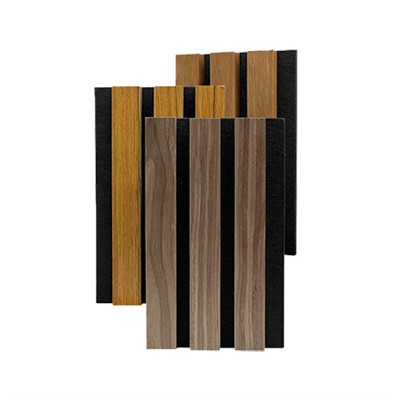
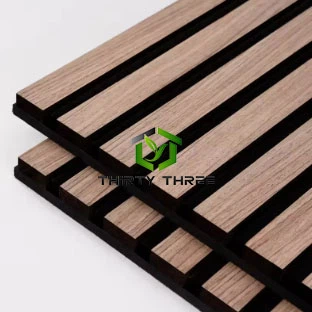
A coffee shop located on a busy street was constantly bothered by the noise of traffic and pedestrians. The owner decided to install our Soundproof Wall Panels Interior Decoration Wood Akupanel. After the installation, customers reported a significant reduction in the outside noise. The coffee shop became a more pleasant place to relax and enjoy a cup of coffee, and the business saw an increase in customer satisfaction and footfall.
Case 2: A Home Office in a Noisy Neighborhood
A freelance writer working from home in a noisy neighborhood was struggling to concentrate due to the constant external noise. We recommended our High Quality Acoustic Wall Panel For Home Decoration. Once the panels were installed in the home office, the writer noticed a remarkable improvement in the noise level. The reduced noise allowed for better focus and increased productivity, leading to more completed projects and higher income.
Case 3: A Music Room in a Budget - Conscious Studio
A music studio on a tight budget needed to control the noise from outside while also keeping the cost down. Our Lower - Price Music Room Decorative CE Technical Akupanels were the perfect solution. The panels not only reduced the external noise but also added a decorative touch to the music room. Musicians could now practice and record without being disturbed by the outside world.
Factors Affecting Performance
While technical acoustic wall panels can be highly effective in reducing outside noise, their performance can be influenced by several factors.
Installation Quality
Proper installation is crucial for the optimal performance of acoustic wall panels. If the panels are not installed correctly, there may be gaps or air leaks that can allow sound to pass through. It is important to follow the manufacturer's installation instructions carefully or hire a professional installer.
Panel Thickness and Density
Thicker and denser panels generally offer better sound - blocking and absorption capabilities. However, the choice of panel thickness and density should also take into account the specific requirements of the space and the budget.
Frequency of the Noise
Different types of external noise have different frequency characteristics. For example, traffic noise typically contains a wide range of frequencies, while the noise from an air conditioner may be more concentrated in a specific frequency range. Acoustic wall panels are designed to perform best within a certain frequency range. Therefore, it is important to choose panels that are suitable for the type of noise you are trying to reduce.
Conclusion
In conclusion, technical acoustic wall panels can indeed reduce noise from outside. Through their sound - absorption and sound - blocking properties, these panels can create a more peaceful and comfortable environment in both residential and commercial settings. However, their effectiveness depends on various factors such as installation quality, panel characteristics, and the frequency of the noise.
If you are looking for a solution to reduce outside noise in your space, I encourage you to consider our technical acoustic wall panels. We offer a wide range of products to meet different needs and budgets. Whether you need soundproofing for your home, office, or music room, we have the right panels for you.
If you are interested in our products and would like to discuss your specific requirements, please feel free to reach out to us. We are more than happy to assist you in finding the best acoustic solution for your space.


References
- Beranek, Leo L. "Acoustics." American Institute of Physics, 1954.
- Kinsler, Lawrence E., et al. "Fundamentals of Acoustics." John Wiley & Sons, 2000.
- Fahy, Frank J., and Peter A. N. Walker. "Sound and Structural Vibration: Radiation, Transmission and Response." Academic Press, 2005.